
Compare with your own history
Compatible recent sleep, heart and optional vital evidence is compared with personal baselines rather than population cut-offs.
How BodyReserve thinks
BodyReserve is designed to answer one question well: how much does your body appear to have in reserve, and what evidence shaped that estimate?
01 · The day-level view
A stateful estimate that connects overnight recovery, activity, workouts, physiological load and honest gaps across the day.
0.1.0-experimental · Internal iPhone build only
02 · The morning view
A 0–100 estimate of overnight restoration relative to your own recent baseline. Approximately 50 means around that personal baseline.
0.1.0-experimental · Internal iPhone build only
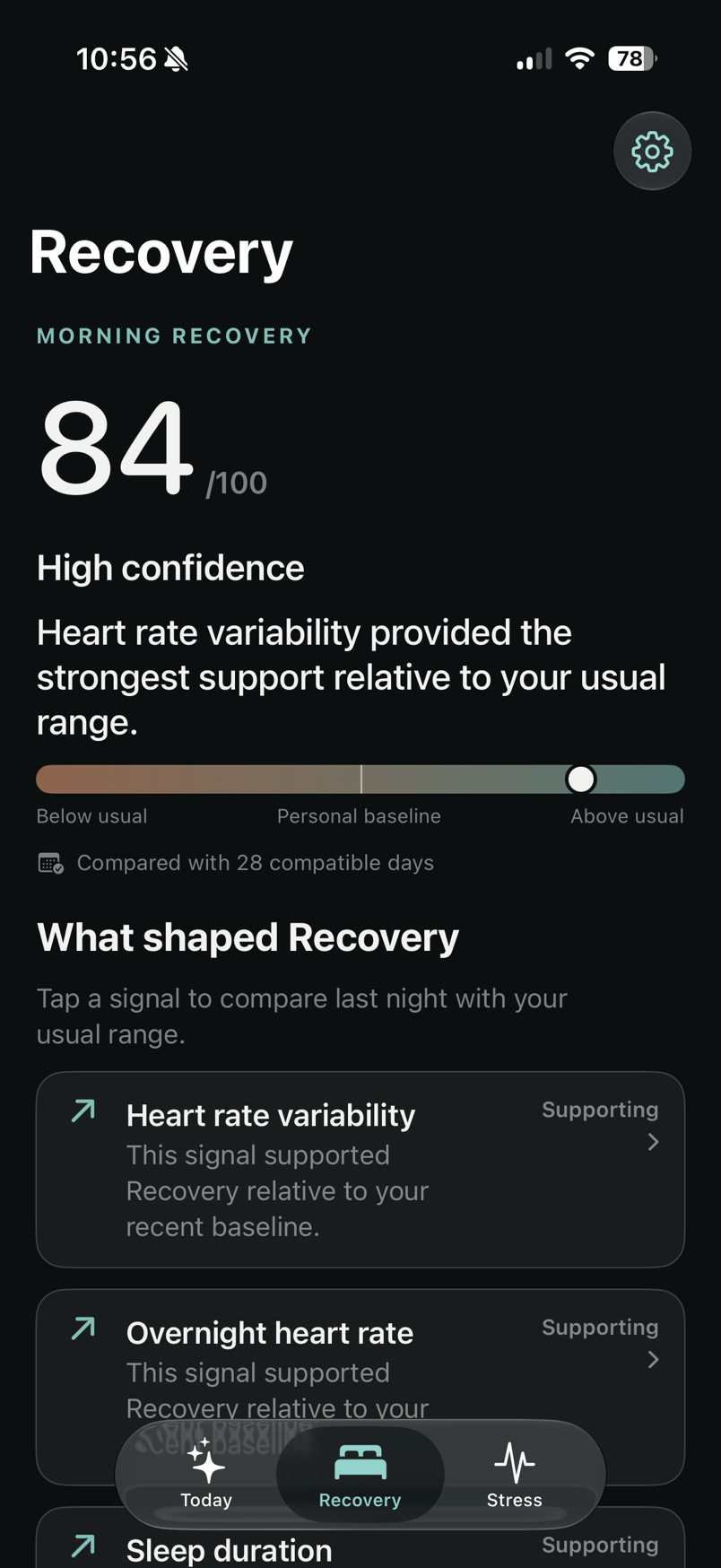
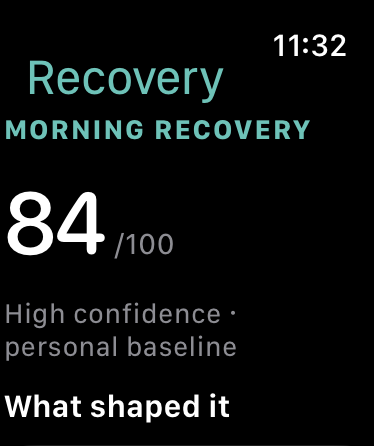
Compatible recent sleep, heart and optional vital evidence is compared with personal baselines rather than population cut-offs.
Approximately 50 means around your recent baseline - not automatically poor Recovery.
Required missing evidence can withhold a result. Missing optional respiratory-rate or wrist-temperature evidence reduces coverage and confidence rather than becoming zero.
Recovery weighting
These experimental weights show how the six Recovery components currently contribute to the estimate. Each signal is evaluated against your personal baseline.
Weights and model version require launch review.
Higher relative to baseline is positive
Lower relative to its compatible baseline is positive
Relative to the personal baseline
Deviation from the person’s usual circular timing can reduce the result
Optional deviation signal
Optional deviation signal
03 · Discrete moments
A discrete estimate built around eligible HRV evidence, strengthened by compatible nearby heart rate when available, with confidence reported separately.
0.1.0-experimental · Internal iPhone build only
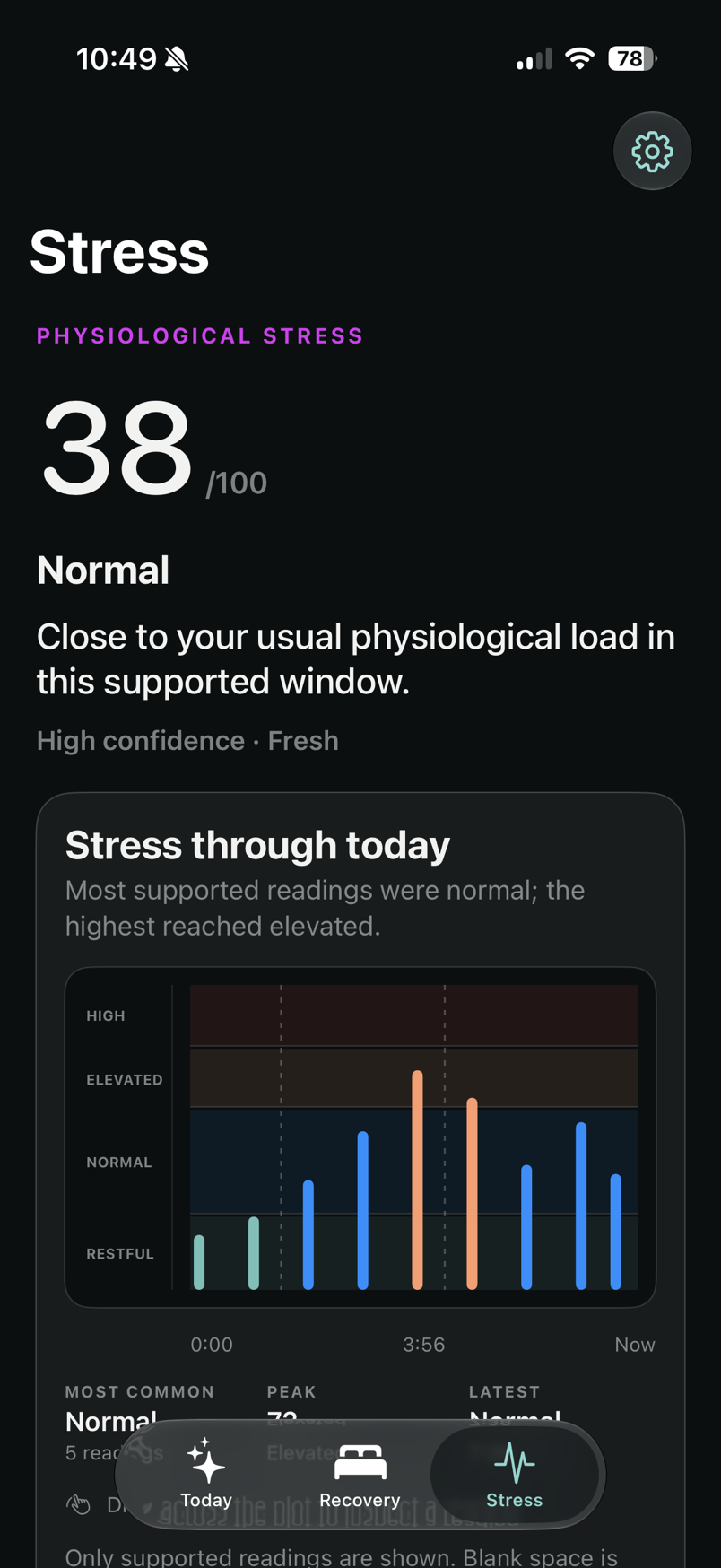
Each eligible estimate begins with HRV compared with compatible personal history. It is timestamped rather than described as live.
Context-valid nearby heart rate can strengthen the estimate when enough compatible evidence is available, but it remains optional.
Active, workout, post-workout, sleeping and uncertain windows can become explicit gaps instead of a fabricated neutral score.
Confidence describes evidence quality and maturity. It does not say whether a physiological-stress score is good or bad.